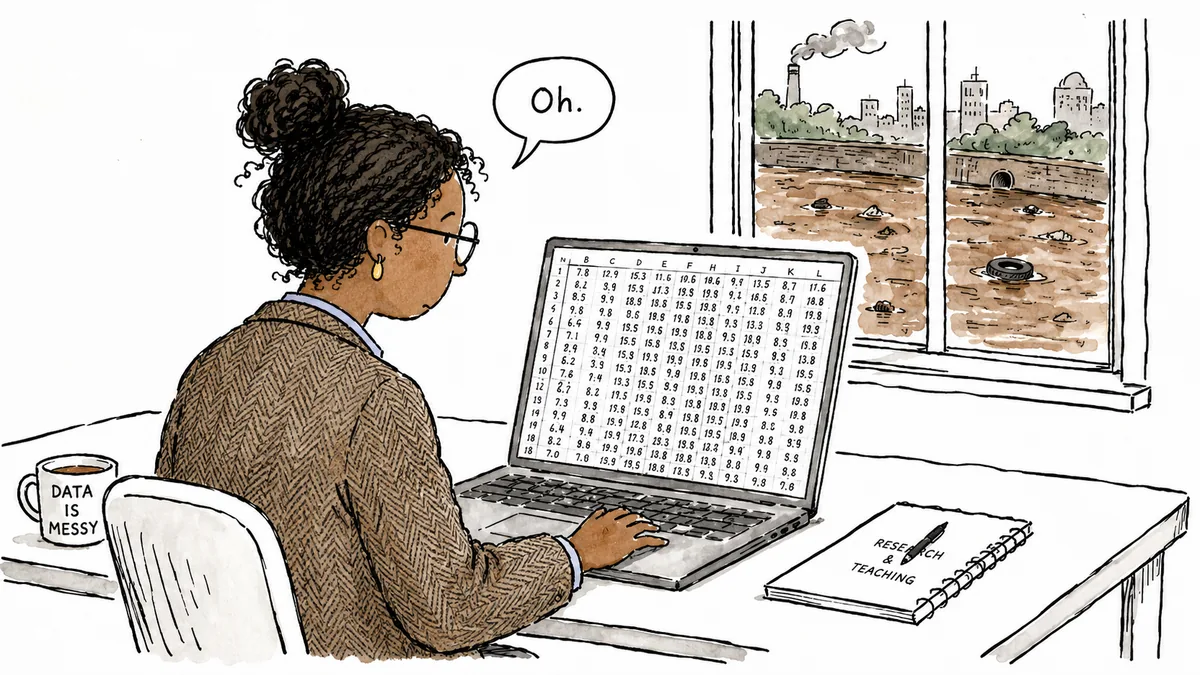
I watched Channel 4’s Dirty Business in February and I haven’t been able to look at my bathroom the same way since. Not because of the sewage scenes, although those were memorable. But because of a simple piece of arithmetic I did afterwards, sitting at my kitchen table in Frome, Somerset, staring at my water bill like it had personally insulted me.
The maths was this: while privatised water companies in England dumped 4.7 million hours of raw sewage into rivers and seas in 20241, those same companies paid their shareholders £1.2 billion. That works out at roughly £255 paid to shareholders for every hour of sewage dumped. I’m not a mathematician, but I’m fairly sure that’s not how plumbing is supposed to work.
And then I thought about the professor.
A retired detective, a computational biologist, and a river full of dead fish
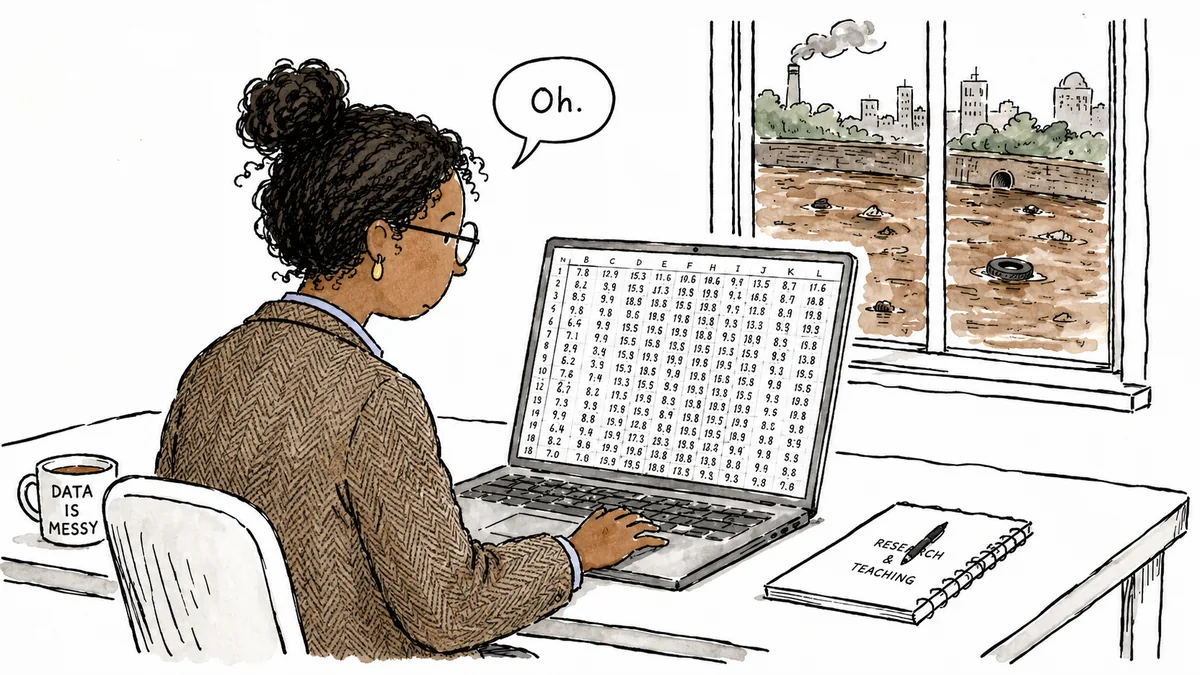
Dirty Business2 is a three-part docudrama that aired on consecutive nights in February 2026. It follows the true story of Ash Smith, a retired detective, and Peter Hammond, a retired professor of computational biology (which means he used computers to analyse biological data, like patterns in brain scans), who noticed fish dying in their local River Windrush in Oxfordshire. They contacted their water company to find out why. The company’s response was, as Channel 4’s own synopsis puts it18, “strange and evasive.” So they did what any reasonable retired detective and computational biologist would do: they spent a decade investigating.
What they found was that untreated domestic sewage was being pumped directly into the river. Regularly. Knowingly. And the regulator, the Environment Agency, was not doing much about it.
Jason Watkins plays Hammond. It’s a quietly devastating performance. Hammond isn’t a campaigner by instinct. He’s an academic. A man who spent his career at UCL using artificial intelligence and image analysis to spot patterns in brain and facial shape data linked to genetic disorders19. When he retired to the Cotswolds, he was presumably expecting to do whatever retired professors of computational biology do. Birdwatching. Reading. Not spending the next decade downloading discharge data from water company spreadsheets and proving that the Environment Agency was failing to regulate an industry that was openly breaking the law.
But that’s what he did. Because the data was there. And nobody was reading it.
The cast also includes David Thewlis as Smith, Asim Chaudhry as a sewage plant whistleblower who risks everything, Posy Sterling as Julie Maughan, and Lucia Keskin18, whose deadpan comedy has no business being this good in a drama about sewage but somehow is.
But the real people behind the drama are the ones that stay with you. Julie Maughan lost her eight-year-old daughter Heather Preen in 1999 after Heather contracted the most aggressive strain of E. coli on a beach in Dawlish, Devon3. A storm pipe had discharged raw sewage into the sea days before. Julie has been campaigning ever since. Twenty-seven years. Reuben, an ex-surfer and teacher from Devon4, developed Meniere’s Disease (a permanent condition that causes vertigo and hearing loss) after surfing in polluted water. Suzi Finlayson5 developed a blood infection after swimming off Bognor Regis that led to infective endocarditis (an infection of the heart lining) and required open heart surgery. She nearly died.
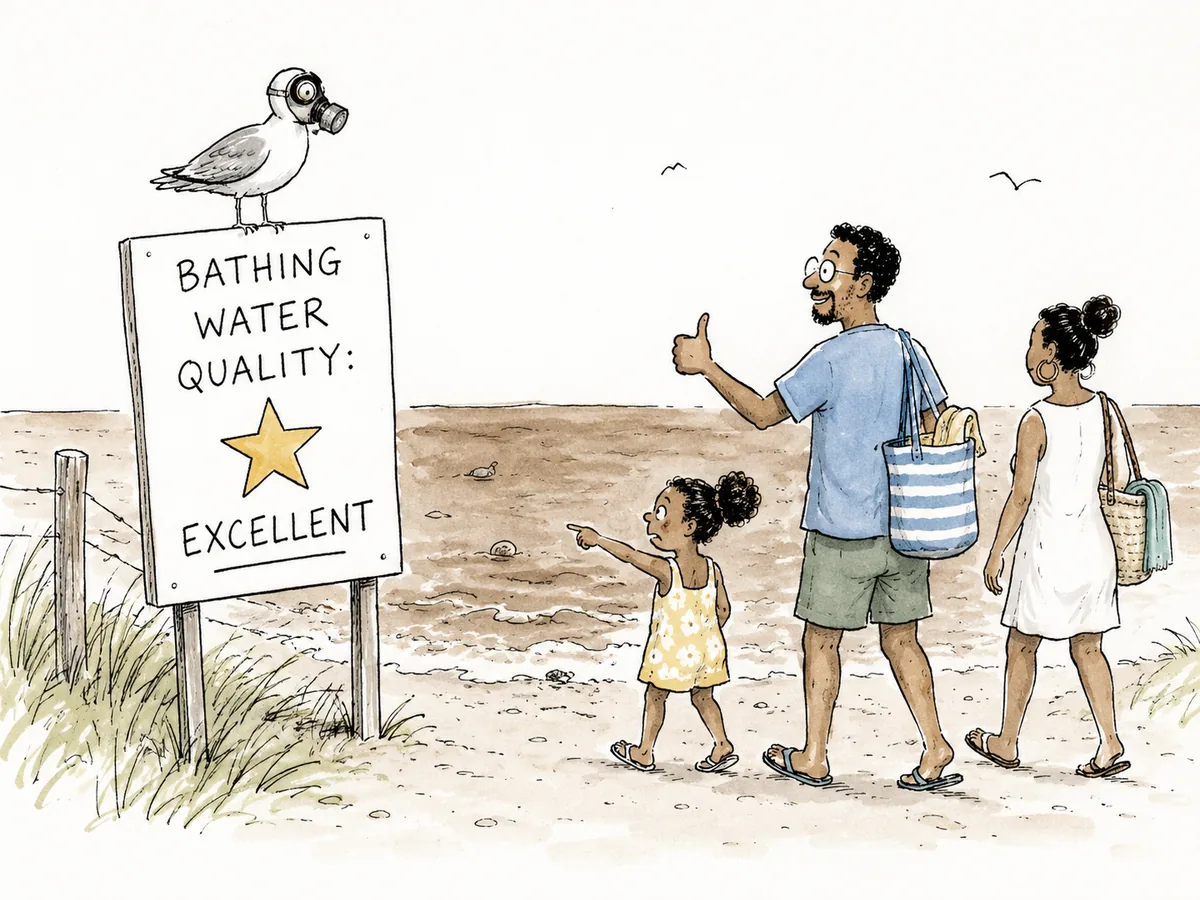
In 2025, Surfers Against Sewage reported1 that 1,236 people got sick after using English bathing waters. Nearly three quarters of those cases were at waters officially classified as “good” or “excellent.” The classification system, in other words, is working exactly as well as everything else in this story.
The numbers that should make you scream into a river (but please don’t, it’s full of sewage)

I’m going to list some numbers now. I’m going to do it calmly, in the style of someone reading a weather forecast about the end of the world.
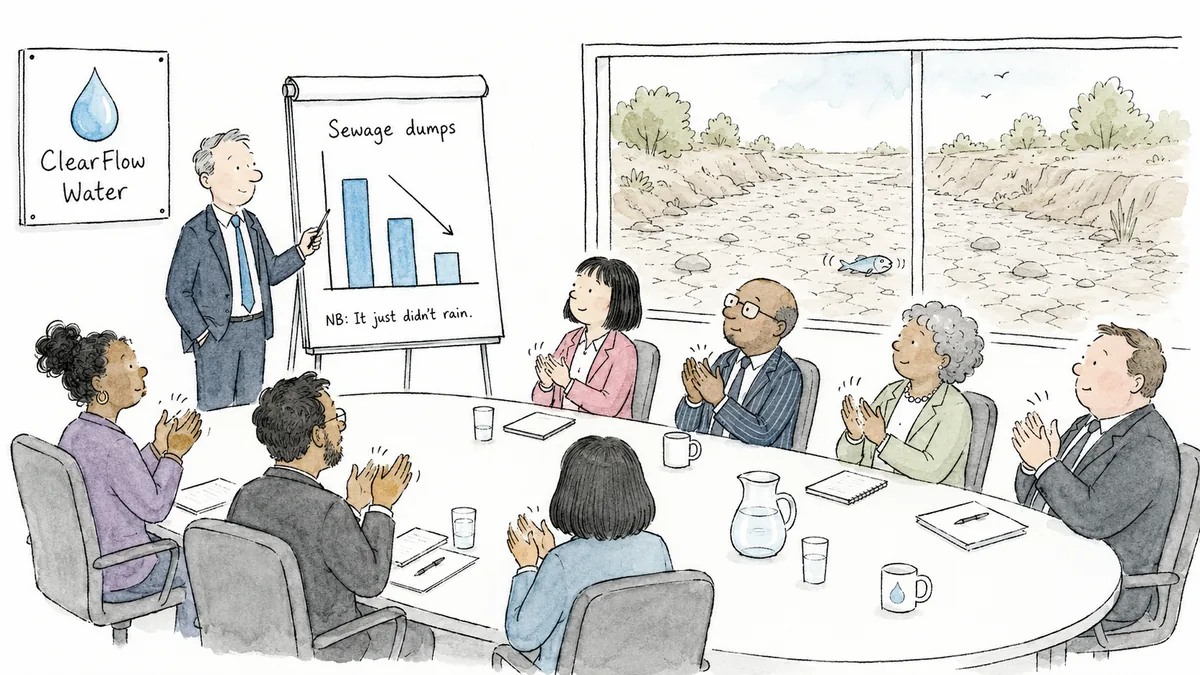
In 2025, the Environment Agency recorded 291,492 monitored spill events6 across England. That’s sewage being discharged into rivers, lakes, and coastal waters. Once every two minutes, give or take. The total spill duration was 1.87 million hours, down from 3.61 million hours in 20246. The government’s headline: “Fewer and shorter storm overflow spills.” Which is true, in the same way that “fewer people were bitten by sharks this year” is true if everyone stayed out of the water because there was a drought.
Because that’s the thing. England had its second driest spring since 1836, and 2025 was the warmest and sunniest year on record for the UK20. The sewage numbers went down mostly because it didn’t rain enough to trigger the overflows. Storm overflows are basically valves built into the sewer system that open during heavy rainfall when the pipes can’t cope. There wasn’t much heavy rainfall. The companies did less damage, not because they’d fixed anything, but because the weather was nice.
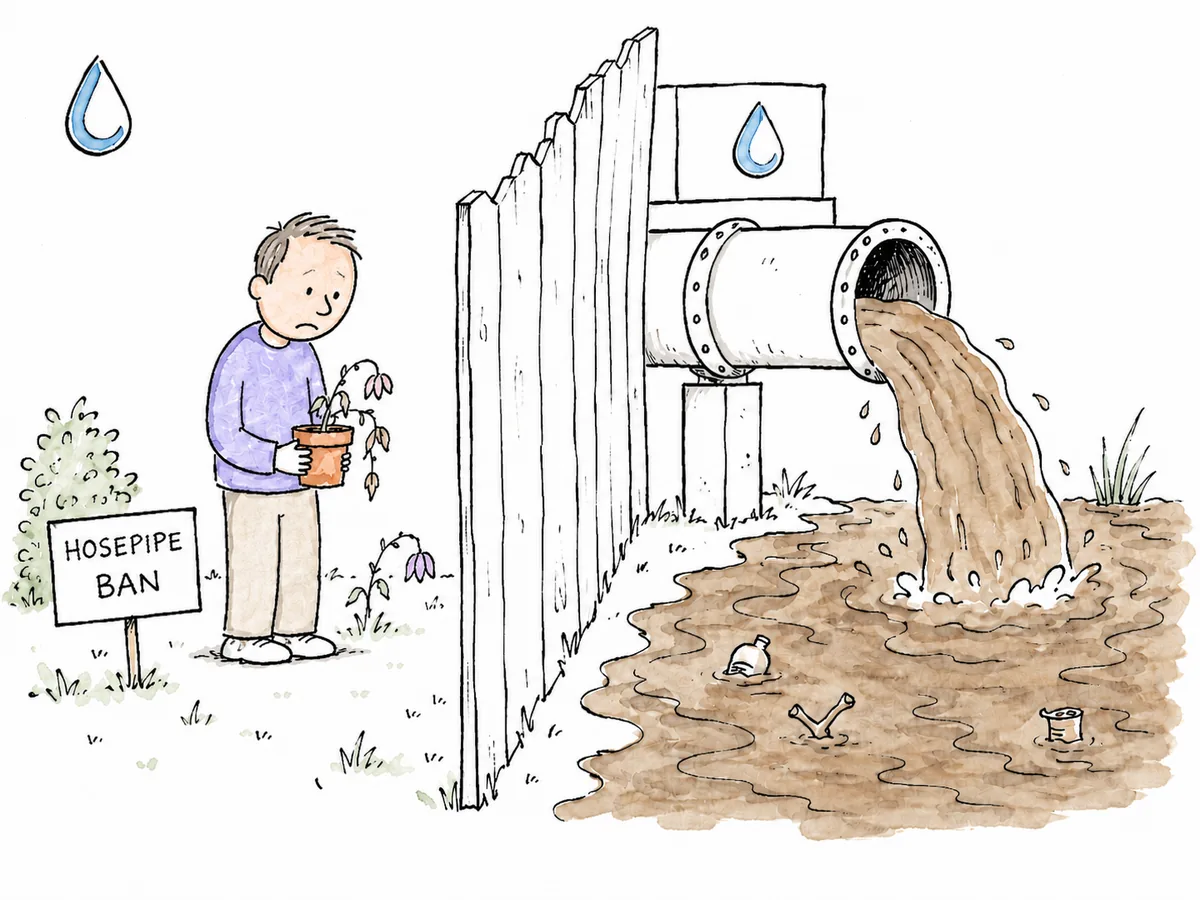
Yorkshire Water, just to pick a company entirely at random, imposed a hosepipe ban on its customers in July 202521. The same company had almost tripled its serious pollution incidents the year before and been given a red rating by the Environment Agency22. So: you can’t water your garden, but we can water the river with your sewage. Clear?
Giles Bristow, chief executive of Surfers Against Sewage, put it this way1: the companies dumped sewage illegally for hundreds of thousands of hours on dry days, made scores of people sick, polluted bathing sites classified as safe, and just three months into 2026, their level of dumping already dwarfs last year.
He’s right. But “the system is broken” suggests something that was once working and has gone wrong. I’m not sure that’s what happened here. I think the system is doing exactly what it was designed to do. It’s just that it wasn’t designed for us.
Follow the money (it’s definitely not going into pipes)
Here is where I need you to sit down, if you’re not already. Possibly with something strong. Water, ideally. Although after reading this, you might check the source first.
When the water companies were privatised in 1989, the government didn’t just hand them the keys. It wrote off all their existing debt and gave them a £1.5 billion “green dowry”7 (a cash sweetener to attract buyers) to get started. They began life with a clean balance sheet, zero borrowing, and a monopoly customer base that had no choice but to pay them. A business model even I could run, and I once broke a website by accidentally deleting the database.
Since then, according to figures cited in Parliament7, the water companies have paid out between £75 billion and £85 billion in dividends to their shareholders. That’s roughly half of everything they spent on infrastructure in the same period. They’ve also accumulated more than £60 billion in debt. Started with nothing. Now owe everything. Paid out half the investment budget to shareholders. Still dumping sewage in the river. That’s the business model.
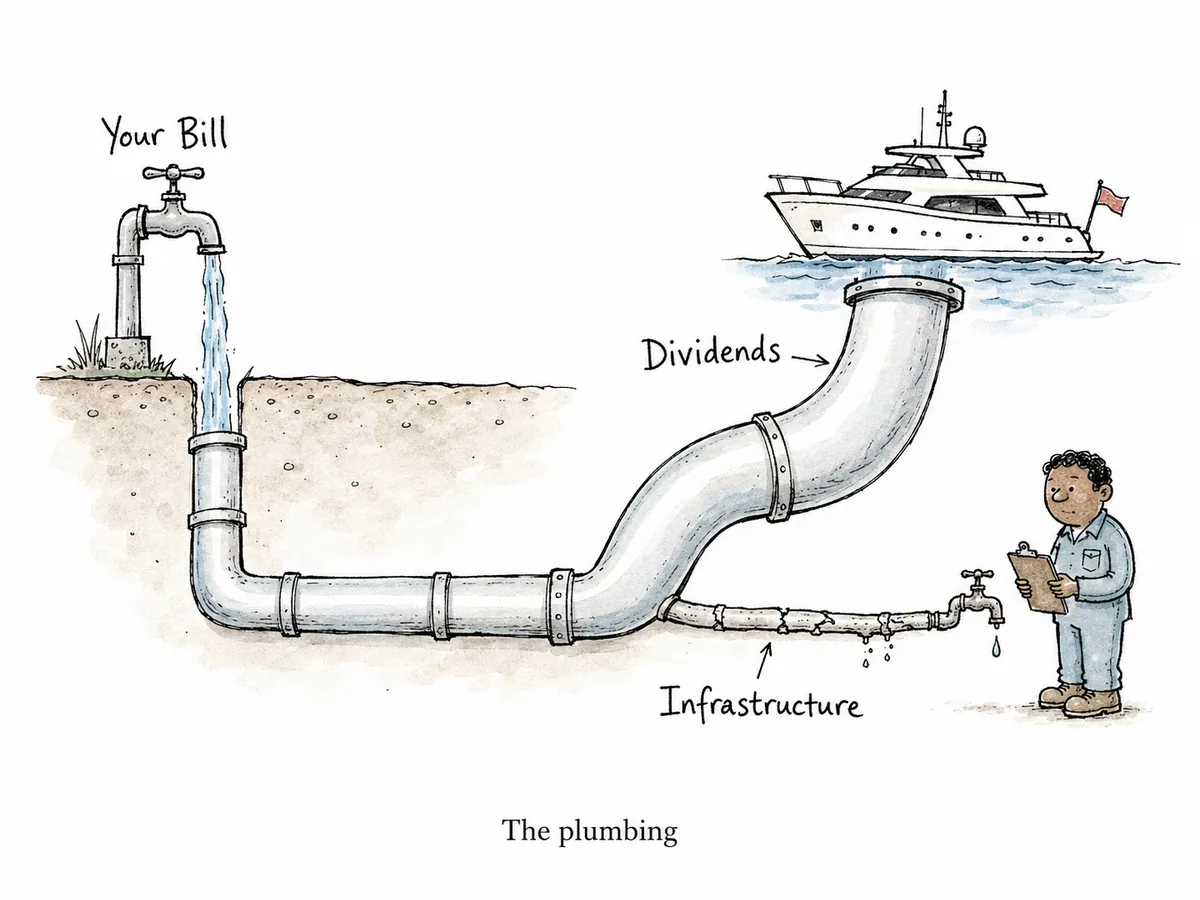
Research from the University of Greenwich8 found that the companies invested no net additional shareholder equity since privatisation. None. The investment came from customer bills. The dividends came from borrowing. The debt gets paid back through higher bills. You, the person reading this while your toilet makes a suspicious noise, are funding the entire operation.
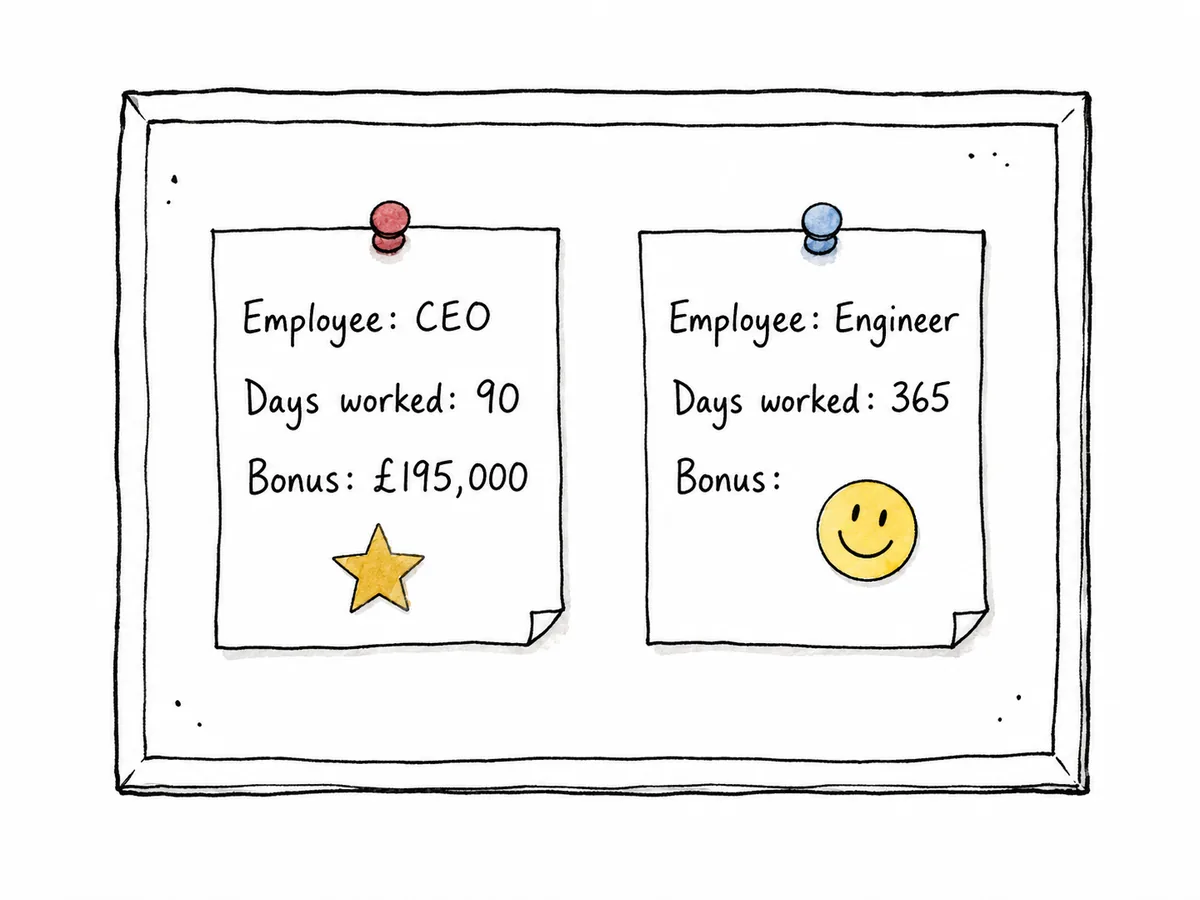
And the people running it? Thames Water’s current CEO, Chris Weston, has a pay package that can reach £2.25 million per year9: £850,000 base salary, pension of £102,000, and a bonus worth up to 156% of salary. In his first three months on the job, he received a £195,000 bonus. In April 2025, the company distributed £18.5 million in retention bonuses to senior executives10, despite having just been fined £123 million by Ofwat (the water regulator) and needing a £3 billion emergency loan from creditors to avoid collapse. The Environment Secretary Steve Reed called it “outrageous.” The Prime Minister’s spokesperson called it “rewarding failure.”
And these companies aren’t even British, not really. England’s nine major water and sewerage companies are more than 90% owned by overseas investors7: sovereign wealth funds and private equity firms based in China, Hong Kong, Singapore, the Cayman Islands, Qatar, and the UAE. People with, as one Member of Parliament noted, “little or no physical contact with polluted rivers and crumbling infrastructure.”
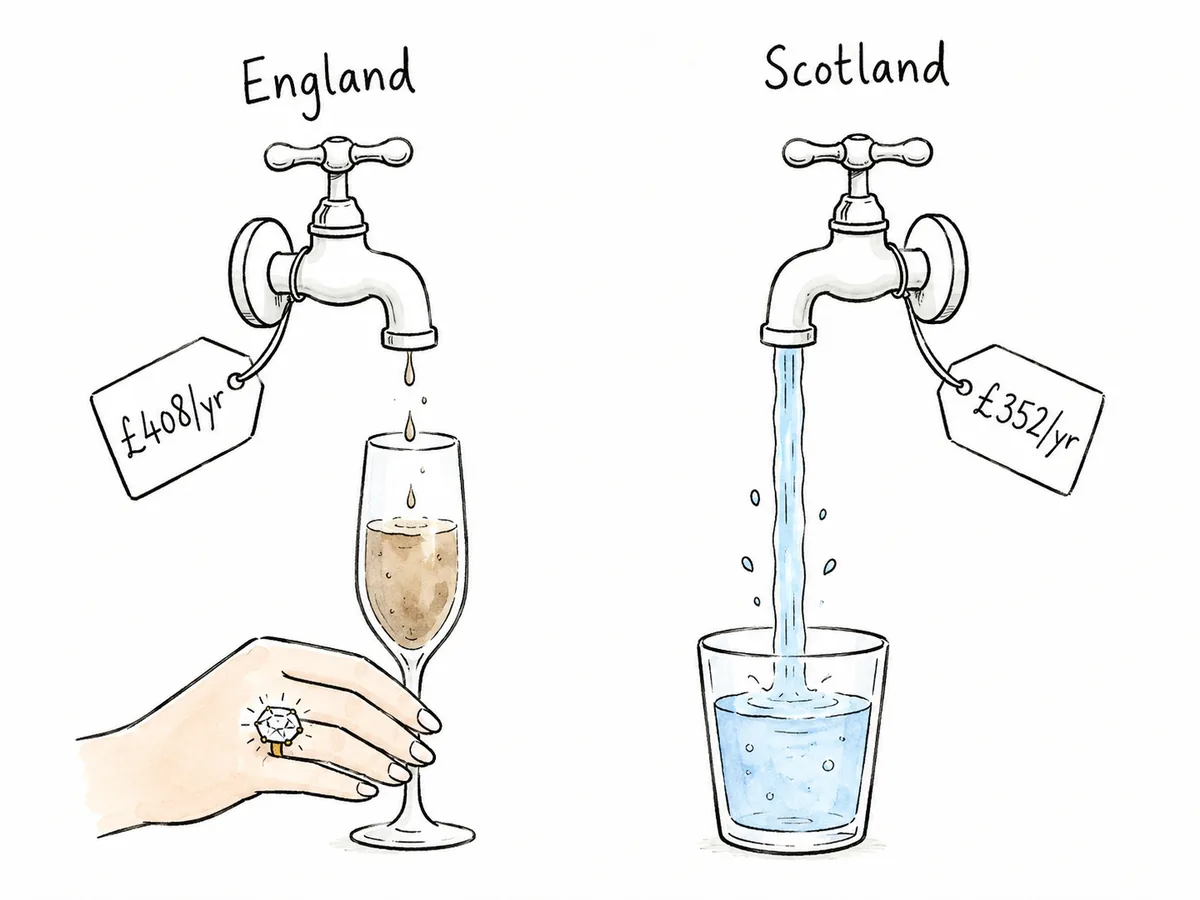
Meanwhile, in Scotland, where water is publicly owned, Scottish Water invests 35% more per household8, charges less, has reduced its debt, and pays no dividends. It’s almost as if the problem is structural. Almost as if you can see it in the numbers, if anyone bothers to look at the numbers.
The professor looked at the numbers
This is the part of the article where I stop being funny, which is a relief for everyone, and talk about data instead.
Peter Hammond, the real Peter Hammond, is a professor of computational biology19. His career was analysing complex datasets to find patterns that human eyes miss. When he looked at the discharge data from the sewage works near his home, he didn’t see a river. He saw a dataset. And the dataset told a story that the water company and the Environment Agency were either not reading or not willing to tell.
Ash Smith brought the detective skills. He knew how to follow a trail, how to spot when someone was lying, how to build a case. Hammond brought the data skills. Together, they built Windrush Against Sewage Pollution11 into a formidable investigative operation and did, for free, what a billion-pound regulator was failing to do. They proved that untreated sewage was being routinely dumped into their river, that the water company knew, and that the system designed to prevent it was, at best, asleep.
Smith said something in an interview that I’ve been turning over in my head since I heard it. In his words12: “Criminality is built into their business model.”
That’s not rhetoric. That’s a conclusion from the data. And the thing about data is that it doesn’t go off-air after three episodes. It doesn’t get scheduled against a rival drama. It doesn’t require a BAFTA-winning actor to deliver it, although Jason Watkins certainly helps. Data just sits there, patiently, waiting for someone to read it and understand what it means.
The water companies are banking on the hope that you won’t.
The data is there. The bridge isn’t.
Here’s what’s remarkable. The data that exposes this scandal is, for the most part, already public. The Environment Agency publishes 10 open APIs13 (application programming interfaces, basically ways for software to pull data automatically): Bathing Water Quality, Water Quality, Hydrology, Flood Monitoring, and more. The Event Duration Monitoring data14, the stuff that shows exactly how often and how long each storm overflow discharged, is downloadable from Defra’s data platform under the Open Government Licence. Thames Water even has its own storm discharge API.
Companies House holds every water company’s filing history, director appointments, and accounts. Ofwat publishes performance data. The information about who owns what, who got paid how much, and where the sewage went is, technically, available to everyone.
Technically.
In practice, trying to find out how much sewage was dumped near your house involves navigating a government data platform that makes an Ofgem price cap document look like a picture book. The EDM data comes in spreadsheets, by company, with columns labelled things like “Permit Number” and “Consented Discharge Type.” The APIs require you to know what an API is, which most people who just want to know if the river is safe to paddle in do not.
I’ve written before about what happens when powerful organisations control closed data15: contracts get awarded in ways that are hard to scrutinise, dependencies get built that are hard to reverse, and accountability becomes something that only exists on paper. The water industry is a mirror image of that problem. Here, the data is technically open, but it might as well be closed because nobody who needs it can actually read it.
What’s missing is the bridge. The thing that takes scattered government data and turns it into something you can use at your kitchen table. Something that lets you type in your postcode and see, in plain English: how many hours of sewage was dumped near you last year, how much your water company paid in dividends, what the CEO earned while it happened, and how your experience compares to Scotland, where the water is publicly owned and the rivers have actual fish in them.
That’s what Power to the Minions is supposed to be about, if I ever finish building it. Taking open data, the stuff that’s technically public but practically invisible, and making it usable. Not by experts. Not by retired professors of computational biology (although they’re welcome). By ordinary people who want to know why their bills are going up while their river is going brown.
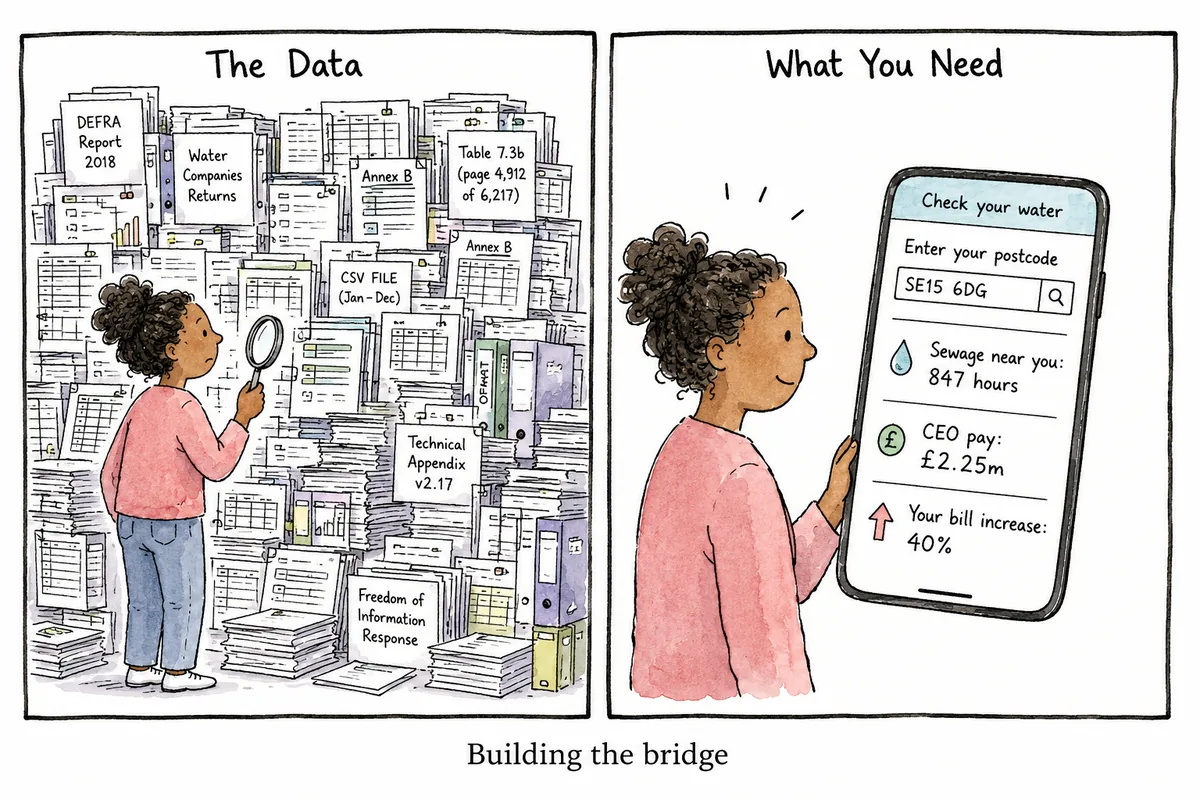
Tim Berners-Lee built the web so that information could flow freely, so that anyone, anywhere, could access what they needed to make informed decisions. Thirty-five years later, the data that proves water companies are pumping sewage into children’s paddling spots is sitting on a government server behind an interface that looks like it was designed to discourage curiosity. That’s not a bug. That’s what happens when accountability is optional.
So what can you actually do?
First: watch Dirty Business if you haven’t. It’s on Channel 4. It’s three episodes. It will make you angry and that’s the appropriate response.
Second: check the Surfers Against Sewage Water Quality Report1 for data on your area. They’ve done extraordinary work making sewage data visible.
Third: support the campaign for public ownership. We Own It16 has been building the evidence base for years. Their figures are devastating and well-sourced.
Fourth: write to your MP. The data exists to make your case. The Water (Special Measures) Act 20256 is law. It gives Ofwat new powers to block executive bonuses and impose stronger penalties. A new single regulator is coming. Ask what’s being done. Ask when it will be operational. Ask why your water bill is going up while the CEO’s bonus went up faster.
Fifth: someone needs to build the tools that make this data impossible to ignore. Not a three-night TV event, brilliant as Dirty Business is. Something permanent. A postcode lookup that shows you exactly what’s happening to your water, your money, and your river, updated in real time, built on open data, free to use, and owned by nobody except the public. I’m having a go at this, between the school run and the software I keep accidentally breaking. It’s slow. But the data is there.
Peter Hammond, a retired professor with a spreadsheet and a dead river, proved that one person with the right skills and the right data can hold a billion-pound industry to account. The point is to make sure you don’t need to be a professor of computational biology to do the same thing. The data should be readable by anyone. The tools should be free. And the companies that dump sewage in your river while paying their CEO £2.25 million should have nowhere to hide.
One last thing
Dirty Business had a working title. Before the lawyers got involved, before the schedulers and the marketing teams and the people who build 10-metre-wide fountains of brown water on the South Bank17, the show was called Isle of Shite3.
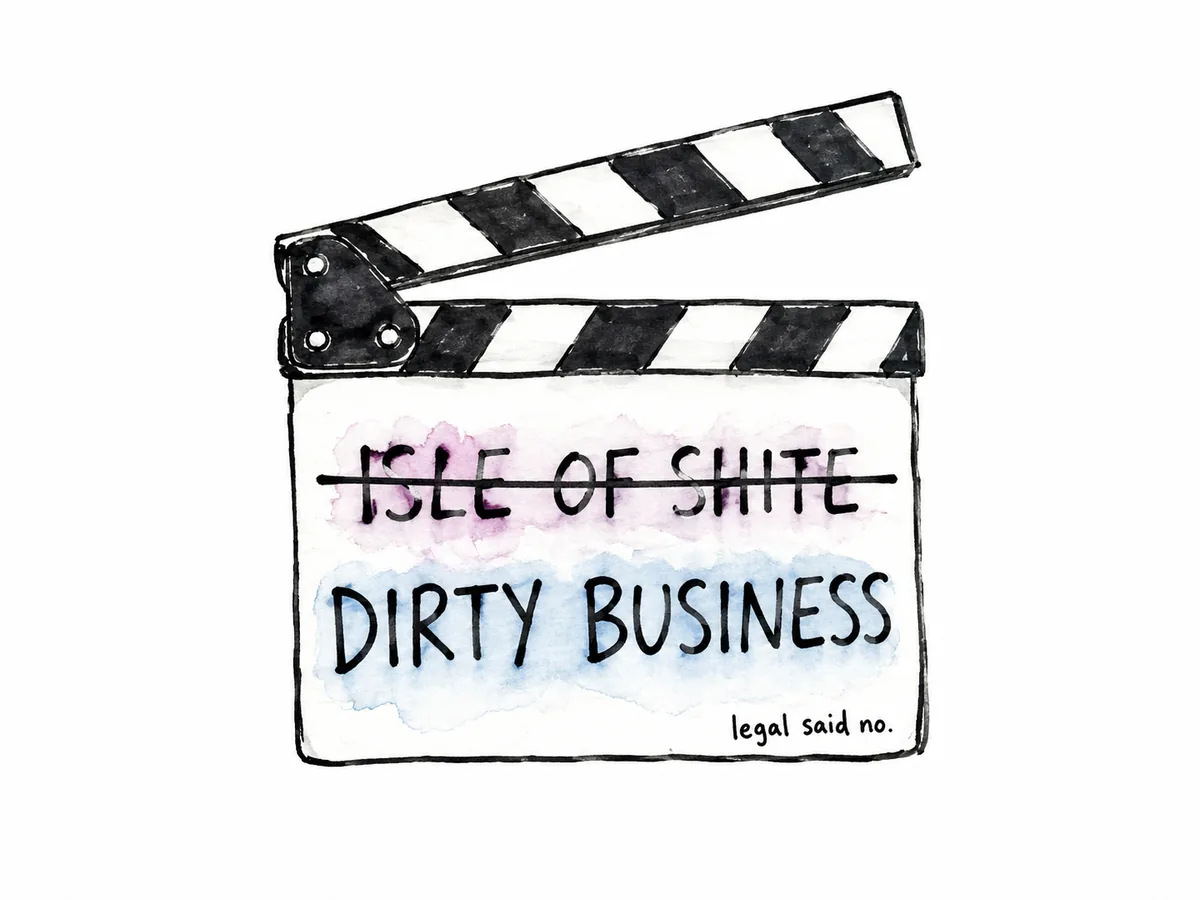
I think they should have kept it. It’s accurate. It’s memorable. And it sounds like something a computational biologist would say very quietly, while looking at a spreadsheet, just before he proves something that a billion-pound industry wishes he hadn’t.
The data doesn’t lie. The rivers don’t lie. The numbers in your water bill don’t lie. The only people lying are the ones who’ve been paid £85 billion to keep the pipes working and haven’t.
Your toilet is a political act. Flush wisely.
A note: This piece is based on publicly available data from the Environment Agency, Surfers Against Sewage, Ofwat, Companies House, Hansard, and academic research from the University of Greenwich. All figures cited are sourced and linked. Opinions are my own and are clearly marked as such. I’m not a lawyer, a water engineer, or a retired professor of computational biology. I’m someone who can just about read a spreadsheet, got angry, and wrote it down. You might too. Well, you might get angry. The spreadsheet bit is optional.
References
- Surfers Against Sewage: Water Quality Report 2025, including 4.7 million hours of sewage discharge in 2024, £1.2 billion in shareholder dividends, 1,236 people made ill. https://www.sas.org.uk/resource/water-quality-report-2025/
- Wikipedia: Dirty Business (TV series), including cast, production details, and WASP origins. https://en.wikipedia.org/wiki/Dirty_Business_(TV_series)
- Big Issue: “Dirty Business: A Deep Dive into TV’s Sewage Drama”, including Joseph Bullman quotes, Heather Preen, and WASP background. https://www.bigissue.com/culture/tv/dirty-business-water-sewage-channel-4/
- Surfers Against Sewage: “The Real People Behind Dirty Business”, including Julie Maughan, Reuben, and Chris Hines. https://www.sas.org.uk/updates/dirty-business-real-people-sewage-drama/
- Oceanographic Magazine: “The Human Cost of the Sewage Crisis”, including Suzi Finlayson’s story and 2026 dumping data. https://oceanographicmagazine.com/news/they-cant-be-trusted-to-protect-our-health-the-human-cost-of-sewage-crisis/
- House of Commons Library: Research Briefing CBP-10027, “Sewage discharges”, March 2026. Covers 291,492 spill events, Water (Special Measures) Act 2025, Cunliffe commission, and government white paper. https://commonslibrary.parliament.uk/research-briefings/cbp-10027/
- Hansard: House of Lords debate on Water and Sewage Companies Directors’ Remuneration, 22 February 2024. Covers dividends since privatisation, total debt, overseas ownership, and zero debt at privatisation. https://hansard.parliament.uk/lords/2024-02-22/debates/55D8B31D-41B2-4991-80D7-1F61127249BA/WaterAndSewageCompaniesDirectors
- University of Greenwich: Hall and Yearwood, “Water and Sewerage Company Finances”, 2021. Covers no net shareholder equity, Scottish Water comparison, dividend analysis. https://gala.gre.ac.uk/id/eprint/34274/
- Wikipedia: Chris Weston (businessman), including pay package details, £195,000 bonus for first three months. https://en.wikipedia.org/wiki/Chris_Weston_(businessman)
- ainvest.com: “Thames Water Compensation Controversy”, August 2025. Covers £18.5 million retention bonuses and £123 million Ofwat fine. https://www.ainvest.com/news/thames-water-compensation-controversy-executive-pay-public-trust-shape-utility-valuations-2508/
- Windrush Against Sewage Pollution: Dirty Business page. https://www.windrushwasp.org/dirty-business
- Voice Magazine: Dirty Business review, including Ash Smith’s “criminality is built into their business model” quote. https://www.voicemag.uk/review/16309/dirty-business-review-tv-channel-4-sewage
- Environment Agency API Catalogue: 10 publicly available APIs including Bathing Water Quality, Water Quality, Hydrology, and Flood Monitoring. https://www.api.gov.uk/ea/
- Defra Data Services Platform: Event Duration Monitoring dataset, downloadable under the Open Government Licence. https://environment.data.gov.uk/dataset/21e15f12-0df8-4bfc-b763-45226c16a8ac
- chloegeorge.co.uk: “The Seeing Stones: How a CIA-Funded Surveillance Company Ended Up Running the NHS”. https://chloegeorge.co.uk/palantir-nhs-seeing-stones/
- We Own It: Water public ownership campaign, evidence base and cost savings analysis. https://weownit.org.uk/public-ownership/water
- Channel 4 / 4Creative: “Fountain of Filth” press release, South Bank marketing stunt for Dirty Business launch. https://www.channel4.com/press/news/channel-4s-4creative-exposes-sick-truth-behind-britains-sewage-scandal-bold-new-fountain
- Channel 4 Press: Dirty Business cast announcement and official synopsis, 15 January 2026. https://www.channel4.com/press/news/david-thewlis-jason-watkins-asim-chaudhry-and-bafta-rising-star-posy-sterling-lead-cast
- Windrush Against Sewage Pollution: “Who We Are”, including Peter Hammond’s career at UCL’s Institute of Child Health, AI and image analysis research, and WASP founding. https://www.windrushwasp.org/who-we-are
- Met Office: “2025 is double-record breaker: UK’s warmest and sunniest year on record”, January 2026. Covers England’s second driest spring since 1836, warmest year since 1884, sunniest year since 1910. https://www.metoffice.gov.uk/about-us/news-and-media/media-centre/weather-and-climate-news/2026/2025-is-double-record-breaker-uks-warmest-and-sunniest-year-on-record
- Yorkshire Water: “Yorkshire Water’s hosepipe restrictions begin”, July 2025. https://www.yorkshirewater.com/news-media/news-articles/2025/yorkshire-water-s-hosepipe-restrictions-begin/
- Yorkshire Post: “Yorkshire Water to hike bills above inflation again”, January 2026. Covers EA red rating and serious pollution incidents almost tripling in 2024. https://www.yorkshirepost.co.uk/business/yorkshire-water-to-hike-bills-above-inflation-again-5494234